

.png)
IPL Photofacial: Benefits, Results, and Why Fall Is the Best Time to Treat Sun Damage

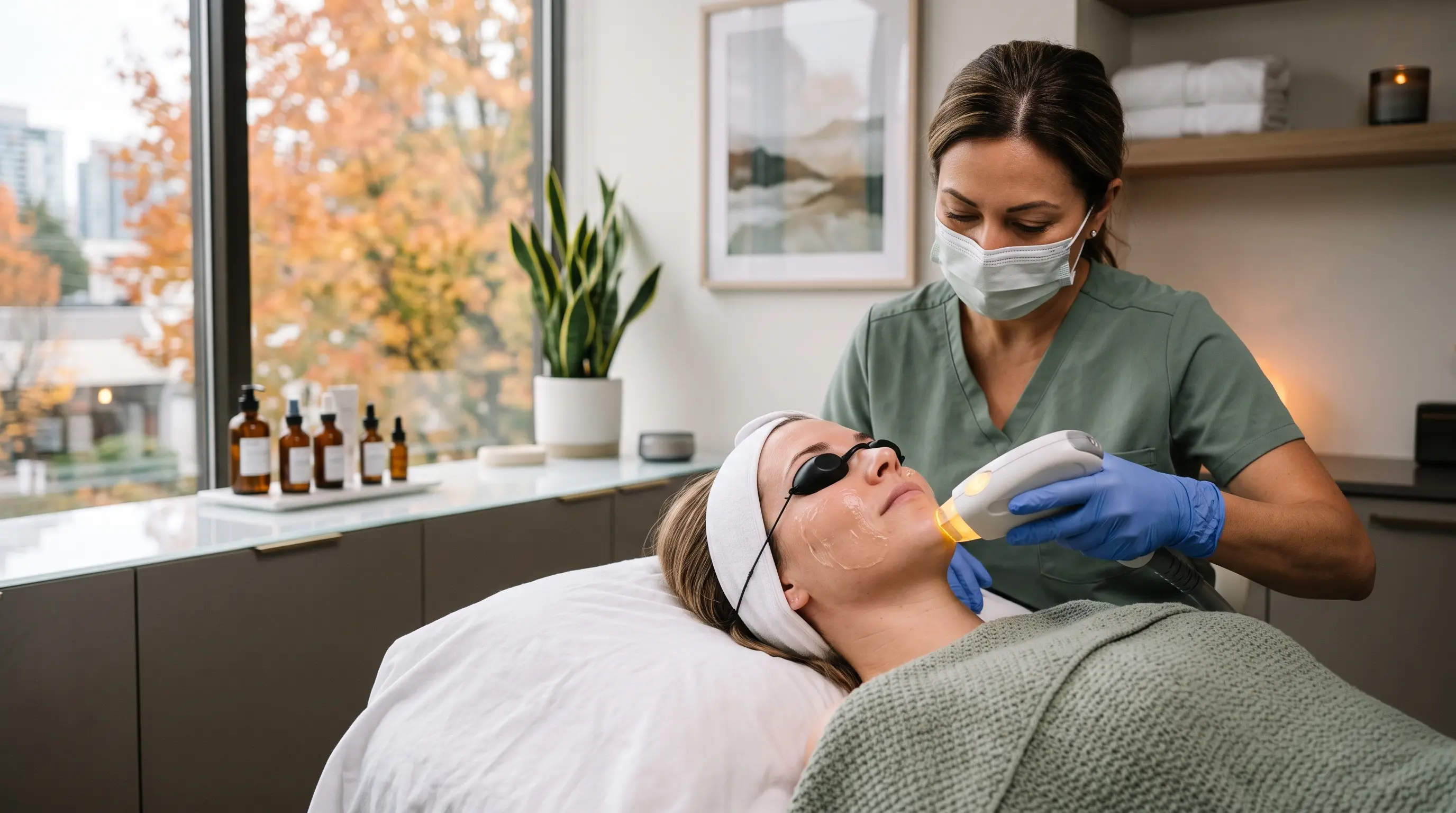
IPL Photofacial: Benefits, Results, and Why Fall Is the Best Time to Treat Sun Damage
After a long Arkansas summer, many people notice new brown spots, uneven tone, and redness that were not there in spring. That is why searches for IPL photofacial benefits climb every year as the weather cools. If you are asking what an IPL photofacial does, how many IPL sessions you need, or IPL vs. laser, this guide explains Lumecca IPL at Restorative Wellness & Aesthetics in Searcy, AR.
Medically reviewed by Scott Cooper, PA-C, DMSc, Restorative Wellness & Aesthetics • Updated September 2026
Quick answer: An IPL (intense pulsed light) photofacial uses broad-spectrum light to target brown pigment and visible blood vessels in the skin. Sun spots darken and flake away within about 7 to 14 days, and redness gradually fades. Most people need 1 to 3 sessions spaced about 4 weeks apart, with little to no downtime. Fall and winter are ideal because you get less sun exposure during and after treatment.
What Is an IPL Photofacial?
An IPL photofacial, also called photorejuvenation, is a non-invasive light treatment. Unlike a laser, which uses a single wavelength, IPL delivers a range of wavelengths filtered to target specific concerns. Light energy is absorbed by melanin (brown pigment) and hemoglobin (red blood vessels), converted to heat, and the targeted spots are gradually cleared by the body.
Restorative Wellness & Aesthetics uses Lumecca IPL by InMode, a high-peak-power IPL designed to deliver visible results in fewer sessions. Learn more on the Lumecca IPL service page.
What Does IPL Treat?
- Sun spots, age spots, and freckles
- Uneven skin tone and blotchiness
- Facial redness and flushing associated with rosacea
- Broken capillaries and spider veins on the face
- Sun damage on the neck, chest, arms, and hands
- Dull texture and early signs of photoaging
IPL Photofacial Benefits
- Treats brown and red concerns at once: One treatment addresses pigment and redness together.
- Minimal downtime: Most people return to normal activities the same day.
- Fast appointments: A full-face treatment usually takes about 20 to 30 minutes.
- Brighter, more even skin: Many patients notice clearer, more uniform tone after their first session.
- Collagen support: Gentle heating may help support collagen over a series of treatments.
Why Fall Is the Best Season for IPL
IPL works best on skin that is not tanned. A tan increases melanin across the whole surface, which raises the risk of side effects and limits how aggressively spots can be treated. Treating in fall and winter offers several advantages:
- Summer sun damage is fully visible and ready to treat.
- Less time outdoors makes it easier to avoid sun during healing.
- A 3-session series can be completed before spring.
- Skin is clearer in time for holiday photos and events.
What to Expect During and After IPL
- Preparation: Avoid tanning, self-tanner, and direct sun for about two to four weeks before treatment. Your provider will review medications that increase light sensitivity.
- Treatment: A cool gel is applied, you wear protective eye shields, and the handpiece delivers brief flashes of light. Most people describe a warm snap, similar to a rubber band.
- Right after: Skin may look pink and feel like a mild sunburn for a few hours.
- Days 2 to 14: Brown spots darken, often looking like coffee grounds, then flake away naturally. Do not pick them.
Aftercare tips: Use a gentle cleanser and moisturizer, apply broad-spectrum SPF 30 or higher every day, and avoid hot tubs, intense workouts, and exfoliating products for a few days.
How Many IPL Sessions Do You Need?
Many people see a clear improvement after one session, but a series of 1 to 3 treatments spaced about 4 weeks apart is common for best results. Rosacea-related redness and broken capillaries often need more sessions than isolated sun spots. Annual maintenance helps manage new sun damage.
IPL vs. Laser vs. Other Skin Treatments
IPL is best for surface-level pigment and redness. Other treatments work on different concerns:
- Fractional RF (Fractora): Better for texture, acne scars, and deeper wrinkles. See skin rejuvenation with Fractora.
- Chemical peels: Exfoliate and brighten, helpful for mild pigment and dullness. See chemical peels.
- Microneedling: Stimulates collagen for texture and scarring. See microneedling.
A skin care consultation is the easiest way to decide which treatment, or combination, fits your skin.
Who Should Not Get IPL?
IPL is best suited for lighter to medium skin tones. It is generally not recommended for deeper skin tones, recently tanned skin, pregnancy, active skin infections, or people taking photosensitizing medications. Melasma can sometimes worsen with heat-based treatments, so it needs a careful, customized plan. Your provider will review your skin type and history first.
Frequently Asked Questions About IPL Photofacials
Does IPL hurt?
Most patients feel a quick warm snap with each pulse. Built-in cooling and gel keep treatment comfortable, and no numbing is usually needed.
How long do IPL results last?
Treated spots are typically cleared, but new sun exposure can create new ones. Daily sunscreen and yearly maintenance help results last.
Is IPL the same as a laser?
No. Lasers use one focused wavelength, while IPL uses a filtered range of light wavelengths, which lets it treat both pigment and redness.
Can IPL help rosacea?
IPL can reduce the visible redness and broken blood vessels associated with rosacea. It does not cure rosacea, so maintenance sessions are common.
Is there downtime after an IPL photofacial?
Downtime is minimal. Expect mild redness for a few hours and darkened spots that flake off over one to two weeks, which makeup can usually cover.
Book an IPL Photofacial in Searcy, AR
Fall is the perfect time to erase summer sun damage. The team at Restorative Wellness & Aesthetics in Searcy, AR can evaluate your skin and create a Lumecca IPL plan for clearer, brighter skin. Schedule a consultation to get started.